




Collecting Guide
Free learning path · ± 5 minutes
Collecting Guide
New to collecting Pokémon cards, or helping your child get started? Answer a few questions, learn along the way how sets, rarities and protection work, and at the end receive a personal collecting plan with product tips that suit your budget.

Collector's glossary
All the terms you come across as a (new) collector, explained briefly and clearly. Click on a question to read the answer.
What is a set?
Pokémon cards are released in sets: collections of around 150 to 250 numbered cards that come out a few times a year. Each card has a set number at the bottom (for example 006/165: card 6 of 165), so you know exactly which ones you already have and which you don't. Many collectors pick one set as a common thread to complete — that gives direction and makes every purchase targeted.
What is the difference between a series and a set?
A series is the overarching generation that covers several sets — such as Sword & Shield, Scarlet & Violet or now Mega Evolution. Within such a series, each year sees several sets. That's why the menu of our shop sorts the sets by series.
What does rarity mean?
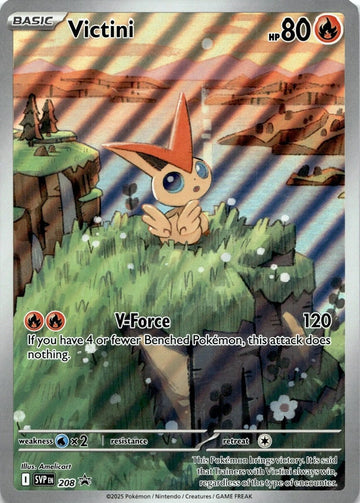
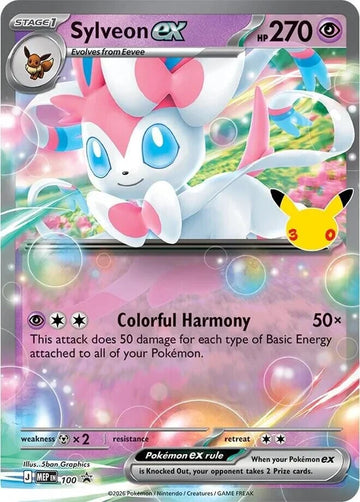
Every card has a rarity, recognisable by the little symbol at the bottom: a circle (Common), diamond (Uncommon), star (Rare) or two stars (Double Rare). Above those there are also special rarities such as Ultra Rare and Special Illustration Rare. The rarer, the harder to find — but note: rare doesn't automatically mean valuable. The popularity of the Pokémon and the artwork count at least as much. In our Collecting Guide route you can see all the basic symbols with real example cards.
What is a Holo?
With a Holo (holographic card), the artwork of the card shines and sparkles. The rarity symbol is the same star as on a regular Rare — the difference is in the shine. The most famous holo of all time is the Charizard from the 1999 Base Set.
What is a Reverse Holo?
With a Reverse Holo is the opposite of a Holo: the card shines, but the artwork doesn't. Almost every card in a set also exists as a Reverse Holo version — Commons, Uncommons, Rares and Holos — and simply keeps its own rarity symbol. Since the Scarlet & Violet series there are, as standard, two in every booster pack (in older sets it was one).
What's in a booster pack?
A modern booster pack contains 10 playing cards plus an online code card. The composition is roughly: a number of Commons and Uncommons, two Reverse Holos (since Scarlet & Violet) and at least one card of Rare or higher — that exciting last card. With a bit of luck, it's an ex, Ultra Rare or Illustration Rare.
What is a booster box?
A booster box is the retail box with 36 booster packs from the same set (sometimes 18 for newer sets). Per pack you usually pay less than when buying them individually, and it's the way to seriously build towards a set list. Expect around €160 per box, depending on the set.
What is sealed?
Sealed means: unopened, still in the original factory packaging with seal. Think of booster packs, Elite Trainer Boxes and booster boxes. Sealed products are popular to open and to keep closed — older sealed products often become more sought after once a set sells out.
What is an Elite Trainer Box (ETB)?
A Elite Trainer Box is a luxury box for a set, usually with 9 booster packs, a set of sleeves, energy cards, dice and a promo card. A nice way to start a new set (±€80), and the sturdy box itself is perfect for storage afterwards.
What is a master set?
A master set is a set that is truly complete: all cards and all variants — so also every Reverse Holo and all secret rares above the official set number. A big (and expensive) challenge. That's why many collectors start with the regular set list and expand later.
What is bulk?
Bulk is a large lot of ordinary cards (mainly Commons and Uncommons) for a low price. Ideal for starting cheaply: you learn to sort, recognise rarities and immediately build a basic collection with trading material. With us you will find bulk from a bundle of 100 cards (€8,99) to lots of thousands of cards.
What are custom packs?
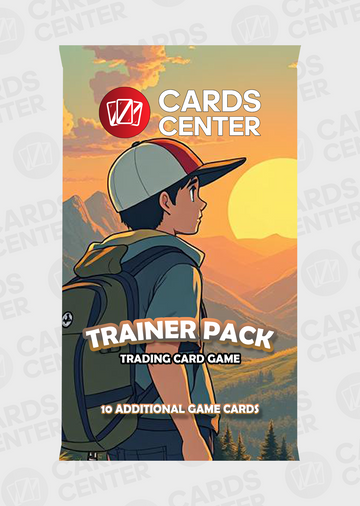
Our custom booster packs are packs put together by Cards Center with an element of surprise — with better chances of nice cards than loose bulk. They come in several levels, from the entry-level Trainer Pack (€4,99) to premium packs with guaranteed top cards. The pack-opening feeling, but with more value for your money.
What are singles (single cards)?
Singles are individual cards that you buy specifically. Looking for specific cards — your favourite Pokémon, or the last gaps in your set list? Then buying singles is almost always cheaper than continuing to open packs until you pull it. In our shop you will find hundreds of single cards per set.
How do I protect my cards?
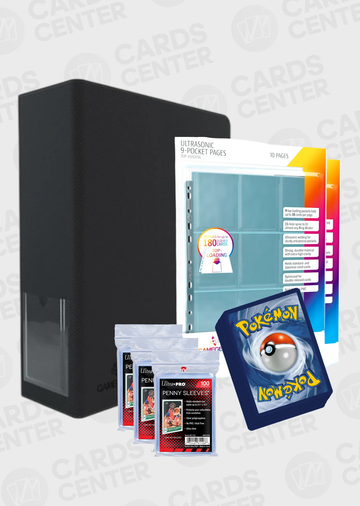
Three basics: sleeves (thin sleeves, for less than a euro per 100) for every card you want to keep, toploaders (hard cases) for your most valuable cards, and a binder with pocket pages to store everything neatly. Keep cards dry and out of direct sunlight, and hold special cards by the edges — the condition of a card determines a large part of its value.
What does the condition of a card mean (Near Mint etc.)?
The condition of a card is described with fixed terms: Near Mint (NM, virtually perfect), Lightly Played (LP, light signs of wear), Moderately Played (MP), Heavily Played (HP) and Damaged. The better the condition, the higher the value — for rare cards the difference between NM and LP can be considerable.
What is grading (PSA/CGC/Beckett)?
Grading is having a card professionally assessed by a company such as PSA, CGC or Beckett. The card receives a grade from 1 to 10 and is supplied in a sealed plastic holder (slab). A high grade can increase the value considerably, but grading costs money and time — mainly interesting for rare cards in top condition. Read more about it on our blog.
What are code cards?
Every booster pack contains a code card that lets you open the same pack digitally in Pokémon TCG Live, the free online card game. If you don't play online, you can even sell us your codes separately — and conversely, you can buy code cards from us at a good price if you collect digitally.
What are Trainer and Energy cards?
Besides Pokémon, every set contains Trainer cards (items, supporters and stadiums for the game) and Energy cards (the "fuel" for attacks). Essential for players; for pure collectors mainly a supplement — although full-art Trainers of popular characters are very much in demand.
What are promo cards?
Promos (recognisable by a black star with "PROMO") are cards that are not in regular sets, but come with special products, events or promotions — think of the promo card in an Elite Trainer Box or collection box. This makes some promos hard to find and extra sought after.
How do I recognise fake cards?
Fake cards often give themselves away through: wrong colours or blurry printing, spelling mistakes, a card surface that is too smooth or too thick, and an incorrect back. A real card has a black middle layer when (carefully!) torn — but it's better not to tear and simply compare with a card you are sure of. Buy from trustworthy shops and be alert on marketplaces to "too good to be true" prices.
What is my card worth?
The value of a card depends on rarity, popularity of the Pokémon, condition and supply and demand. You can check current market prices on sites such as Cardmarket. Good to know: the vast majority of all cards (Commons/Uncommons) are worth only pennies — the value lies in a small number of top cards per set. So above all, collect what you like.
Are Japanese cards different?
Japanese cards are often released earlier, sometimes have different sets and are known for their crisp print quality. Some collectors deliberately collect Japanese (often cheaper per pack), others prefer English because that's the standard here. Mixing is of course allowed — it's your collection.
What are vintage cards?
Vintage refers to the cards from the early years, roughly 1999–2003: Base Set, Jungle, Fossil and their contemporaries. Cards with a "1st Edition" stamp in good condition are particularly sought after and valuable. Do you still have an old collection lying around? Handle it carefully, store it properly straight away and consider having the top cards graded.
How do I trade cards safely?
Trading is one of the most fun sides of collecting. A few rules of thumb: trade value for roughly equal value (check Cardmarket together if in doubt), inspect cards carefully for damage, and use sleeves when handing them over. For children: agree at home that special cards are only traded after discussing it — that prevents tears in the playground.
Learn to collect Pokémon cards with the Collecting Guide
The Collecting Guide is Cards Center's free interactive beginner's guide. You answer a few short questions about who you are, what appeals to you and what you want to spend, and along the way you learn how sets work, how to recognise rare cards by their rarity symbols and how to protect your collection properly. At the end you receive a personal collecting plan with a step-by-step plan, a budget breakdown and product tips that suit your way of collecting — whether you are buying for your child, starting again after years out of nostalgia, or holding your very first card today.
Rather browse straight away? Take a look at our bulk deals to start affordably, open one of our custom booster packs, choose a starter pack with all the bells and whistles, or protect your cards straight away with sleeves and binders. Want to read more? Our beginner's guide on the blog calmly runs through all the basics once more.